


Tub Reglazing Vs Replacement: Which Is Better For Your Indianapolis Rental?

When a bathtub looks worn, stained, or outdated, the question isn't really about the tub.
It's about the math.
Property managers and rental owners in Indianapolis face this decision regularly. A tenant moves out, the bathroom needs attention, and you're left weighing two paths: reglaze what's there or rip it out and start fresh.
Both options work. But they solve different problems at very different price points.
The Real Cost Difference
Let's start with the numbers, because that's where most decisions like this get made.
Tub reglazing typically costs between $400 and $800. That includes surface preparation, application, and curing time.
Full tub replacement averages around $5,700, with a range of $2,000 to $9,400 depending on the scope. That number includes demolition, disposal, potential plumbing adjustments, tile repair, drywall work, and labor.
Reglazing runs roughly 25% of what a full replacement costs.
For a single unit, that difference might feel manageable. Across a portfolio of rentals, it compounds quickly.

Time Is the Hidden Variable
Cost is easy to measure. Time is harder to quantify, but it matters more than most people realize.
Reglazing takes one to two days. The tub is ready for use within 24 to 48 hours after completion.
Replacement can stretch anywhere from several days to a few weeks. That timeline depends on plumbing complexity, structural repairs, tile matching, and contractor availability.
For a rental property, every day the unit sits empty is a day without income. The math shifts when you factor in vacancy costs.
A $400 reglaze that gets a unit back on the market in 48 hours looks very different from a $3,000 replacement that adds two weeks to your turnover timeline.
This isn't about cutting corners. It's about understanding what the situation actually requires.
What Reglazing Solves
Reglazing addresses surface-level issues. Stains, discoloration, minor scratches, outdated colors, and general wear.
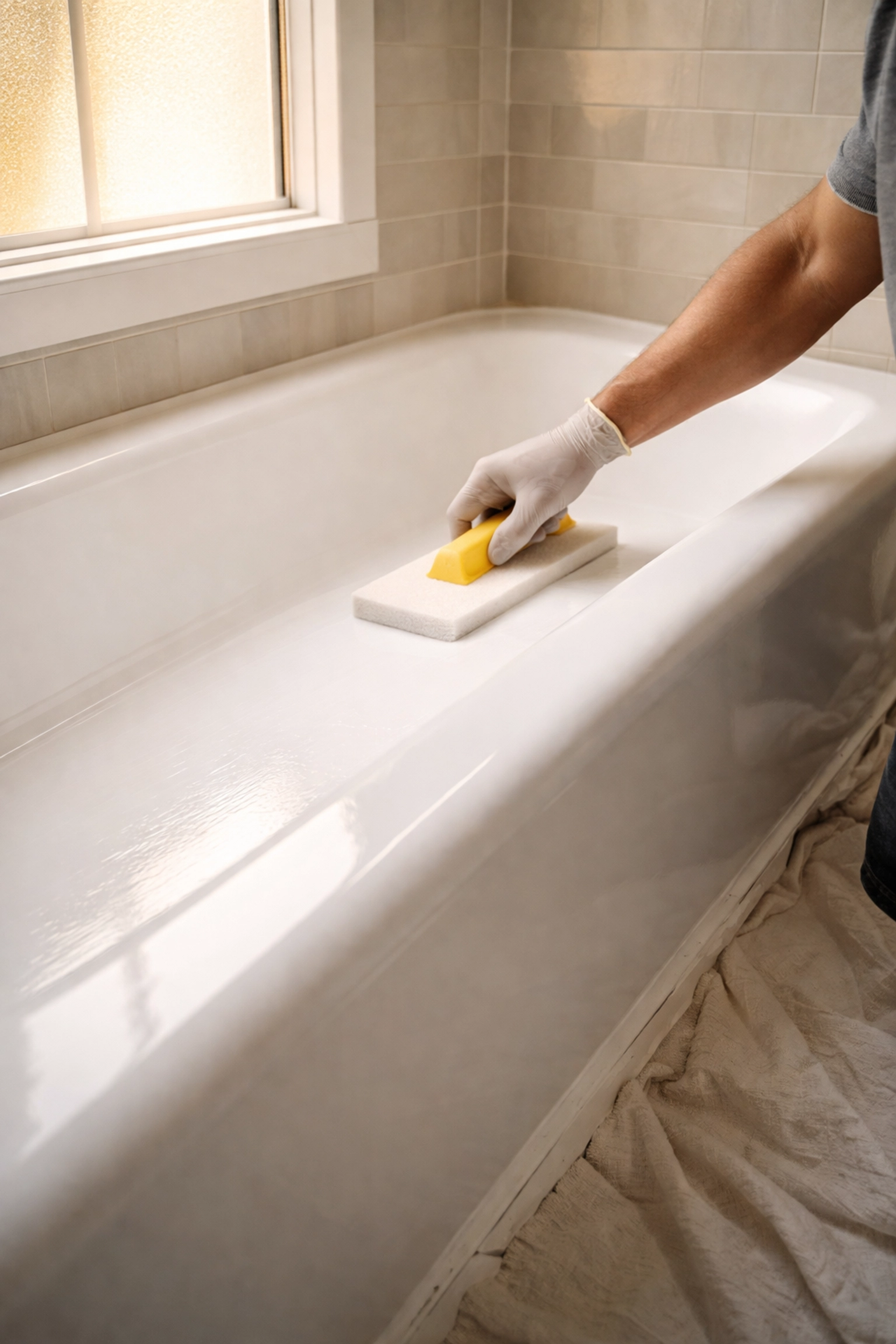
The process involves cleaning and etching the existing surface, then applying a durable coating that bonds to the original material. Done correctly, the result is a smooth, refreshed finish that looks new.
It's not a permanent fix. Reglazing lasts five to ten years with proper care. Most tubs can be reglazed two to three times before diminishing returns set in.
For rental properties, that lifespan aligns well with tenant turnover cycles. You're not restoring a family heirloom. You're maintaining a functional asset.
What Reglazing Doesn't Solve
This is where the decision gets nuanced.
Reglazing works on the surface. It won't fix structural damage, persistent mold, or hidden water damage beneath the tub.
If the tub itself is cracked, warped, or compromised, reglazing is a cosmetic layer over a structural problem. The same applies if there's mold or moisture damage in the walls or subfloor around the tub. Coating the surface doesn't address what's happening underneath.
In those cases, replacement becomes the only real option.
The key is honest assessment. A stained tub with surface wear is a reglazing candidate. A tub with soft spots in the surrounding floor or recurring mold is telling you something different.
The Indianapolis Context
Indianapolis rental markets move at their own pace. Turnover expectations, tenant standards, and competitive positioning all play into these decisions.
In most Indianapolis rental scenarios, tenants expect functional, clean bathrooms. They're not inspecting for luxury finishes or brand-name fixtures. They're checking that things work and look reasonably maintained.
A professionally reglazed tub meets that standard. It presents well, photographs well for listings, and holds up to normal use.
Full replacement makes sense when you're repositioning a unit: moving it upmarket, addressing long-deferred maintenance, or dealing with genuinely damaged infrastructure.
For routine turnover, reglazing handles the job at a fraction of the cost and time.
The Systems Thinking Approach
Property management at scale requires systems thinking. Individual decisions compound into patterns that either drain resources or preserve them.
Reglazing isn't just a cheaper option. It's a faster option. And speed, in the context of rental turnover, is worth money.
Consider the full picture:
A unit sits vacant during renovation
Mortgage payments, insurance, and utilities continue
Marketing efforts pause until the unit is ready
Potential tenants move on to available options
Every day of delay has a cost. Sometimes that cost is obvious. Sometimes it shows up later as a lease signed at the wrong time of year or a longer vacancy than expected.
Choosing the right solution for the actual problem: not the most comprehensive solution possible: is how portfolios stay efficient.
When Replacement Makes Sense
There are situations where replacement is the right call.
Structural damage to the tub itself. Cracks, chips that go through the material, or warping that affects function.
Water damage beneath the surface. Soft subflooring, mold in the walls, or signs of long-term moisture intrusion.
Major remodels. If you're reconfiguring the bathroom layout, upgrading to a different tub style, or converting to a shower, replacement becomes part of a larger project.
End-of-life scenarios. A tub that's been reglazed multiple times and no longer holds a finish well has reached its practical limit.
In these cases, the upfront investment in replacement protects against larger problems down the line.
Making the Decision
The question isn't which option is universally better. It's which option fits the situation.
Start with an honest assessment of the tub's condition. Surface issues point toward reglazing. Structural issues point toward replacement.
Factor in your timeline. If the unit needs to turn quickly, reglazing keeps the schedule tight. If you have flexibility and the tub needs more comprehensive work, replacement might be worth the wait.
Consider the unit's position in your portfolio. A property you're holding long-term might warrant more investment. A unit you're preparing to sell or reposition might need different treatment.
The goal isn't to spend the least amount possible. It's to spend appropriately for the outcome you need.
The Quiet Advantage
Most rental property decisions come down to resource allocation. Time, money, attention.
Reglazing preserves all three. It solves a common problem quickly, affordably, and without requiring extensive coordination.
Replacement has its place. But it's a larger commitment for a larger problem.
Understanding when each option applies is the difference between reactive maintenance and strategic property management.
The tub isn't really the question. The question is what the situation requires and what resources you're willing to allocate to solve it.
For most Indianapolis rental turnovers, reglazing handles the job. It looks professional, lasts long enough, and keeps units moving.
When the situation calls for more, replacement is there. But it doesn't have to be the default.
If you're weighing options for an upcoming turnover or exploring how to streamline your make-ready process, we're available to discuss what makes sense for your situation.
Comments