


How to Cut Apartment Turnover Time in Half With Smart Make Ready Services
- Vinicio Sanchez

- Mar 3
- 4 min read
The difference between a seven-day turnover and a fourteen-day turnover isn't just lost rent. It's lost positioning, compromised deal flow, and the compounding cost of distraction. Every additional day a unit sits vacant pulls your attention away from strategic decisions and keeps your team reacting instead of executing.
Most property managers assume turnover time is fixed: a necessary friction built into the rental business. But turnover delays aren't inevitable. They're symptoms of how work is structured, sequenced, and coordinated. When you redesign those systems, you collapse timelines without adding pressure or cutting corners.
Here's what actually accelerates make-ready without creating chaos.
The Real Bottleneck Isn't Labor: It's Coordination
Speed problems in turnover rarely come from slow workers. They come from gaps between phases. A unit waits two days for drywall repair. Then waits another day for paint to arrive. Then sits idle over the weekend before flooring starts Monday.

The work itself might only take five days. But the calendar stretches to twelve because no one owns the sequencing. Maintenance finishes their scope and moves on. Vendors show up when they're available. Cleaning happens whenever someone remembers to schedule it.
Coordination isn't a detail. It's the architecture that determines whether work flows or stalls. When trades are sequenced back-to-back and scheduling is centralized, units move through phases without pause. The same scope that previously took two weeks finishes in seven days: not because anyone worked faster, but because no one waited.
Dedicated Ownership Changes Everything
Splitting turnover work across multiple maintenance techs: each juggling resident service requests, emergency calls, and turnover tasks: creates competing priorities by design. When a toilet backs up or an HVAC unit fails, turnover work stops.
Properties that assign one person exclusively to make-ready remove that conflict. A dedicated technician doesn't get pulled into unrelated issues. Their sole focus is moving units from vacant to rent-ready, which creates rhythm and accountability that split attention never will.
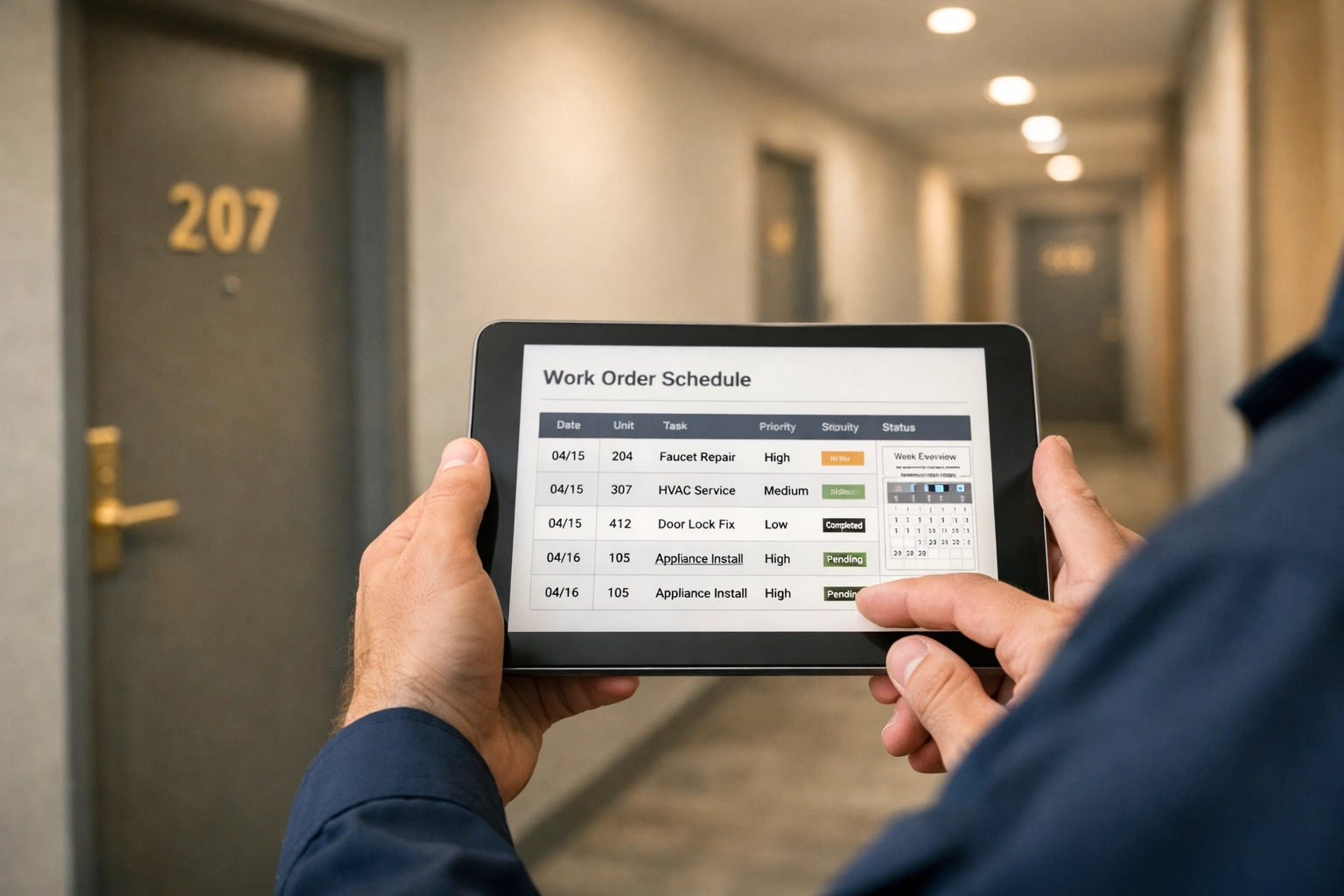
This isn't about working harder. It's about removing the structural friction that forces people to choose between urgent and important. When turnover has dedicated ownership, timelines become predictable and exceptions become visible instead of routine.
For smaller portfolios, this might not justify a full-time role. But the principle still applies: separating turnover work from reactive maintenance: even if it's just blocking specific days or hours: produces measurably faster results than treating it as one task among many.
Preventive Maintenance Removes Work Before It Starts
The fastest way to shorten turnover time is to eliminate tasks from the checklist entirely. Most turnover delays trace back to issues that were deferred during occupancy: HVAC systems that needed servicing months ago, plumbing leaks that went unaddressed, appliances limping toward failure.
When those problems surface during move-out, they add days to the schedule. Emergency HVAC repairs can't happen instantly. Appliance replacements require ordering and delivery. What could have been routine maintenance becomes a critical path item.

Properties that address common failure points proactively: through scheduled HVAC maintenance, appliance inspections, plumbing checks, and hardware replacement: remove those tasks from turnover scope. Units still need cleaning, painting, and cosmetic updates. But they don't need structural repairs that halt progress and create scheduling uncertainty.
This doesn't eliminate all surprises. But it removes the predictable ones, which is where most delays live.
Operational Standardization Creates Speed
Repeatable processes remove decision friction. When your team executes the same checklist for every turnover, they stop thinking about what comes next and simply move through the sequence. That repetition builds speed naturally.
Beyond checklists, tracking historical data: like exact paint quantities required for each floor plan or typical repair timelines for specific unit types: enables accurate forecasting. Teams can prep materials before a unit vacates, order supplies in bulk, and begin work immediately instead of waiting for someone to measure, estimate, and source what's needed.
This level of operational refinement also eliminates the small inefficiencies that add up: mid-day hardware store runs, waiting for paint to be mixed, discovering halfway through that you're short on materials.
Bulk purchasing creates cost savings, but the real value is eliminating interruptions. When everything required for a turnover is staged and ready, work flows without breaking rhythm.
Quality Standards Prevent Rework and Hesitation
When maintenance teams don't have clear guidelines for repair-versus-replace decisions, they either over-invest time in marginal repairs or pause to ask for approval. Both create delays.
Establishing decision frameworks: minor wall marks get touch-up paint, not full repaints; normal floor wear requires cleaning, not replacement; cabinet hardware gets swapped if damaged, not refinished: allows teams to move forward confidently without waiting for direction.

These standards also prevent rework. When quality expectations are ambiguous, teams either overshoot (wasting time on unnecessary perfection) or undershoot (requiring corrections later). Clear standards calibrate effort to actual requirements, which keeps timelines intact and prevents the ping-pong of re-inspection and touch-ups.
This isn't about lowering standards. It's about defining them precisely enough that execution becomes obvious.
Professional Services Fill Capacity Gaps Without Adding Overhead
Internal teams can only absorb so much volume before timelines stretch. When multiple units turn simultaneously or seasonal demand spikes, even well-structured operations hit capacity limits.
Rather than hiring additional full-time staff to handle peaks: which creates overhead during slower periods: properties can bring in professional turnover services as needed. This stabilizes timelines without locking in fixed costs or stretching existing teams beyond sustainable capacity.

The decision isn't internal versus external. It's about matching resources to demand in a way that keeps units flowing without creating fragility. Some properties maintain lean internal teams and supplement strategically. Others handle baseline volume internally and outsource peaks. The model matters less than the underlying principle: capacity constraints shouldn't dictate turnover timelines.
Systems Over Effort
Cutting turnover time in half doesn't require working twice as hard. It requires removing the structural inefficiencies that extend timelines: uncoordinated scheduling, reactive maintenance, ambiguous standards, and capacity mismatches.
When those systems are in place, faster turnovers become the default, not the exception. Units move through make-ready predictably, vacancies shorten, and your team shifts from constant firefighting to consistent execution.
The difference isn't effort. It's architecture.
If your current turnover process feels more reactive than reliable, the opportunity isn't pushing harder: it's redesigning how the work flows. We help property owners across Indianapolis build those systems. Reach out if you'd like to explore what that could look like for your portfolio.
Comments