


Are You Losing Money on Slow Apartment Turnovers? Here's What Indianapolis Investors Need to Know
- Vinicio Sanchez

- May 19
- 5 min read
Most investors track rent per square foot. Fewer track days vacant between tenants.
That gap costs money.
A unit sitting empty for 45 days instead of 30 doesn't just delay income: it compounds. Mortgage payments continue. Property taxes don't pause. Insurance premiums remain due. The carrying cost of vacancy is constant, and it's entirely predictable if you're measuring the right things.
Indianapolis investors often underwrite deals assuming minimal vacancy because "the market is strong." But market strength and individual property performance are different variables. Your property can underperform in a strong market if your turnover process doesn't match the pace of demand.
The Real Math of Vacancy
Every additional day a unit sits vacant represents a percentage of annual rent you'll never recover.
If your property commands $1,250 per month in rent, each vacant day costs roughly $41. Stretch a 30-day turnover to 50 days, and you've lost $820 per unit. Multiply that across a 20-unit portfolio with average annual turnover, and the number starts to matter.
The Indianapolis-Carmel-Anderson metro area shows an overall rental vacancy rate between 8.8% and 9.2%. But that's an average. Your performance depends on submarket, property class, and how quickly you can execute apartment make ready services.
Downtown vacancy is expected to drop into the low-5 percent range for the first time since 2022. Smaller submarkets like Lawrence and Greenwood-Johnson County are absorbing new completions at varying rates. If your property sits in a tightening submarket and you're still running 45-day turnovers, you're leaving income on the table.
Where Time Actually Gets Lost
Most turnover delays don't happen because of scope creep or surprise repairs. They happen because of coordination failures.
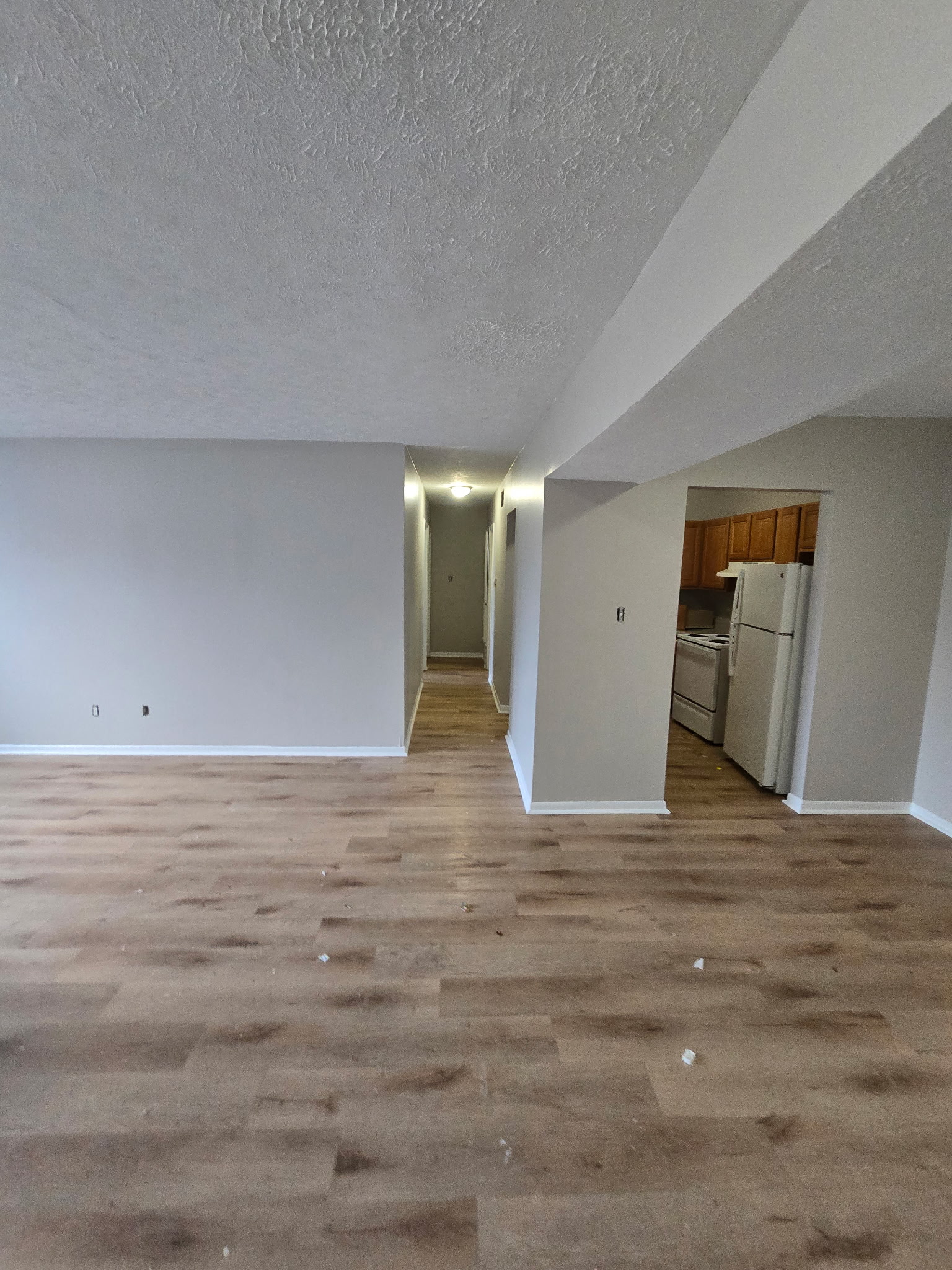
Apartment turnover painting should be straightforward. Patch drywall. Prime. Paint. Clean. Done.
But it rarely unfolds that way. Contractors show up without materials. Painting starts before repairs are complete. Inspections get scheduled after work is finished, creating rework loops. Each handoff introduces friction, and friction costs days.
The properties that move fastest aren't necessarily spending more. They're spending less time managing the process. They've removed the coordination layer between decision and execution.
If you're calling three vendors to schedule overlapping work, then following up to confirm timelines, then adjusting schedules when someone's delayed, you're not managing a turnover: you're producing one. That's a distraction cost most investors don't account for until they calculate how much time they've spent per unit.
Indianapolis Market Context for 2026
Cap rates in revitalizing zones are running between 6% and 8% with steady rent growth. Median market-rate rents have climbed to approximately $1,252. The fundamentals support acquisition and hold strategies: if you can keep units leased.
But higher-end properties (4- and 5-star) are expected to maintain elevated vacancy rates even as new supply declines. That doesn't mean demand is soft. It means competition is real, and differentiation matters.
A unit that's been sitting for 40 days because the painting wasn't scheduled until after the flooring, and the flooring wasn't ordered until after the inspection, isn't competing well: even if it's in a strong submarket.

The advantage goes to properties that can move from notice-to-list in under 30 days without cutting corners. That's not a function of spending more. It's a function of having systems that don't require your involvement at every decision point.
The Execution Problem
There's a reason sophisticated investors delegate the finish. It's not because they can't manage the work. It's because managing the work costs more than delegating it: when you account for time, attention, and opportunity cost.
Apartment turnover painting isn't complex. But coordinating it across multiple units, multiple vendors, and variable timelines is. Every decision you make about vendor scheduling, material ordering, or quality checks is time you're not spending on acquisitions, financing, or portfolio strategy.
The properties that turn fastest aren't necessarily working with the fastest contractors. They're working with systems that eliminate coordination overhead. One point of contact. Defined timelines. Predictable results.
You're not paying for labor alone. You're paying to remove yourself from the execution layer so you can focus on decisions that actually require your judgment.
What Actually Moves the Needle
Three variables control turnover speed: vendor reliability, process clarity, and coordination efficiency.
Vendor reliability means showing up when scheduled and completing work without rework. Process clarity means everyone knows what's required before the project starts: no surprises, no scope changes, no waiting for decisions. Coordination efficiency means eliminating the back-and-forth that turns a 20-day project into a 45-day one.
Most investors focus on the first variable and ignore the other two. They'll spend hours vetting contractors for reliability but won't standardize the make-ready checklist or delegate coordination to a single point of accountability.
The result is predictable: good contractors working inefficiently because the system around them introduces delays.
If you're managing turnovers unit-by-unit, vendor-by-vendor, you're optimizing for cost per transaction. If you're managing for speed and consistency, you're optimizing for annual cash flow. Those are different strategies with different outcomes.
The Cost of Involvement
Every hour you spend managing a turnover is an hour you're not spending evaluating the next acquisition or optimizing the portfolio you already own.
That's not a time-management problem. It's an allocation problem.
If your involvement doesn't materially improve the outcome: if a competent team would execute to the same standard without your input: you're not adding value. You're adding cost.
The math is straightforward: calculate what your time is worth per hour, then multiply that by the hours you spend per turnover. Compare that to the cost of delegating coordination to a team that handles apartment make ready services as a system, not a series of individual tasks.
For most investors, the delegation cost is lower than the involvement cost. Not because labor is cheap, but because coordination overhead is expensive when it's fragmented.

What Indianapolis Investors Should Track
If you're not measuring days-to-lease, you're guessing about performance. That metric should be broken into components: days to complete make-ready, days to list, days to lease.
Most delays happen in the first phase. Make-ready timelines stretch because scope isn't defined upfront, vendors aren't coordinated, or inspections create rework loops.
Track your average make-ready timeline per unit class. Compare it to your submarket's average days on market. If your internal process is taking longer than it takes the market to absorb available inventory, you're losing money to process inefficiency.
The Indianapolis market averaged approximately 37 days on market in December 2025. If your properties are taking 50+ days from vacancy to lease, the issue isn't market demand: it's internal execution.
The Path Forward
Slow turnovers aren't usually caused by one catastrophic failure. They're caused by small inefficiencies that compound: a vendor who shows up late, a material order that's delayed, an inspection that reveals work that should have been caught earlier.
The solution isn't working harder. It's removing the points where your involvement is required but doesn't improve the outcome.
You can keep managing turnovers the way you have been: calling vendors, coordinating schedules, checking quality, troubleshooting delays. Or you can delegate that layer to a team that treats turnover as a system, not a project.
The work gets done either way. The question is whether you're the one doing it.
If your portfolio would benefit from faster, more predictable turnovers without adding management overhead, that's a conversation worth having. We work with Indianapolis investors who prefer systems over effort. You can reach out when it makes sense for you.
Comments